
You know how political pundits love to make predictions? Well, the West Bengal election 2026 made fools out of most of them. For nearly a decade and a half, the Trinamool Congress had built this image of invincibility in the state. Mamata Banerjee was not just a chief minister; she was an emotion for a large chunk of the electorate. But when the dust settled on May 4, 2026, that entire narrative lay in tatters. The Bharatiya Janata Party, which had been trying to break into the state since 2014, finally kicked the door down.
Let me take you through how the West Bengal election 2026 unfolded, because honestly, it was nothing short of a political earthquake.
I still remember the morning of the counting day. Everyone was glued to their television sets. The initial trends trickled in around eight o'clock, and within an hour, it became clear that this was not going to be a normal election result. The BJP was leading on over 190 seats. The TMC was struggling to stay above 90. For a party that had won 213 seats just five years earlier in 2021, this was a collapse of historic proportions.
The West Bengal election 2026 had been scheduled in a very different way compared to previous years. The Election Commission decided to wrap things up quickly. Only two phases. The first phase happened on April 23, covering 152 constituencies in North Bengal. Places like Cooch Behar, Darjeeling, Alipurduar, and Malda. These are border districts, and the issue of infiltration from Bangladesh has always been a sensitive topic here. The second phase took place on April 29, covering the remaining 142 seats, which included the big cities like Kolkata, Howrah, and Hooghly. The voter turnout was insane. Almost 92.5 percent of the electorate came out to vote. In a state known for political awareness, this was still a record.
Now, let me talk about what actually happened on the ground during the West Bengal election 2026 campaign. The TMC tried its best. Mamata Banerjee campaigned like her life depended on it. She focused heavily on her government's welfare schemes, especially Lakshmir Bhandar, which gave monthly money to women. She kept calling the BJP "outsiders" who did not understand Bengal's culture. That strategy had worked in 2021. But in 2026, it did not work the same way.
Why? Because the BJP changed its playbook. Amit Shah came to Bengal with a manifesto that was designed to hurt the TMC where it was strongest. He promised that if the BJP won the West Bengal election 2026, every unemployed youth would get Rs 3,000 per month. Women would get the same amount. That effectively doubled what the TMC was offering. You do not need a political science degree to understand what that kind of promise does to a voter's mind. Suddenly, the TMC's welfare schemes looked small and inadequate.
But the BJP did not stop there. Their manifesto also talked about implementing a Uniform Civil Code in the state. They promised a strict action against what they called "love jihad". And on the border issue, they came up with this slogan: Detect, Delete, Deport. Whether you agree with it or not, that message resonated deeply with a large section of the Hindu population in the border districts. People had been complaining for years about demographic changes. For the first time, a major national party was speaking their language without any hesitation.
The exit polls before the West Bengal election 2026 results were all over the place. Some agencies predicted a hung assembly. Today's Chanakya, which has a decent track record in some states, gave the BJP 192 seats and the TMC only 100. But other surveys, like People's Pulse, said the TMC would still win with 178 seats. So nobody really knew what was coming. That uncertainty made the counting day even more dramatic.
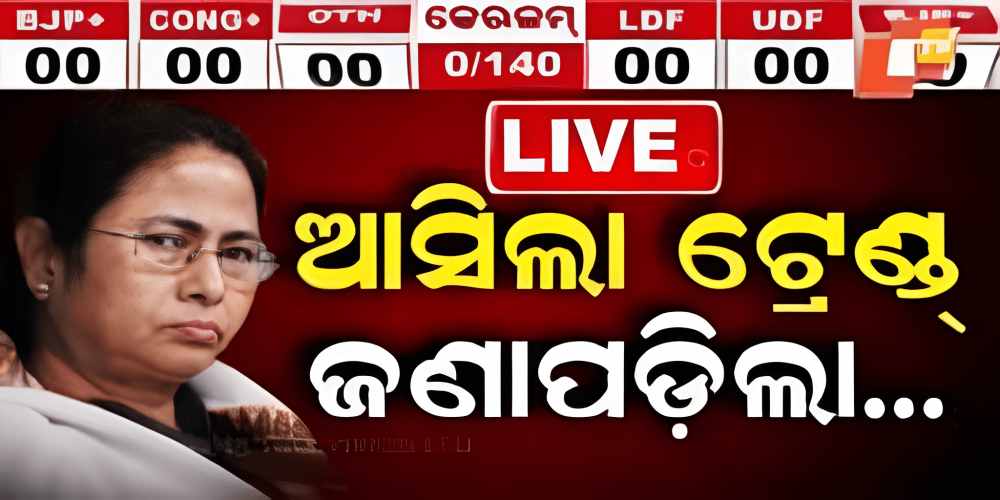
When the results started coming in on May 4, the BJP's celebrations began early. By midday, they had crossed 148 seats, which is the majority mark in the 294-member assembly. The TMC's leaders started disappearing from television studios. Mamata Banerjee held a press conference in the afternoon. She looked tired and angry. She alleged that the counting process had been halted at several places. She said the Election Commission was working with the central government to manipulate the leads. She told her party workers not to leave the counting centers and insisted that the tide would turn after sundown.
But the tide did not turn. The Election Commission rejected her allegations and continued the counting. By evening, it was official. The BJP had won the West Bengal election 2026 with a comfortable majority. The TMC was reduced to less than 100 seats. Some of the biggest TMC heavyweights lost their constituencies. In Murshidabad, a district that was traditionally seen as a TMC stronghold, a small regional candidate named Humayun Kabir from the Aam Janata Unnayan Party even gave the TMC a tough fight.
So what really caused this massive shift? If you ask me, there is no single reason. There are several. First, the anti-incumbency factor. Mamata Banerjee had been in power since 2011. That is fifteen years by 2026. No matter how popular a leader is, fifteen years is a long time. People start feeling that change is needed. Second, the unemployment problem in Bengal did not go away despite the TMC's claims. Young men and women were struggling to find jobs. The BJP's promise of Rs 3,000 per month sounded like a lifeline. Third, the BJP successfully consolidated the Hindu vote in a way they had not managed in 2021. The issues of infiltration and religious politics worked in their favor this time.
The West Bengal election 2026 also saw a massive gender shift in voting patterns. Women had been the bedrock of the TMC's support for years. But the BJP's promise of higher monthly assistance pulled many of them away. You cannot blame them. If one party offers you Rs 1,500 and another offers you Rs 3,000, the math is simple.
Another important factor was the reduction in polling phases. In 2021, the eight-phase election had given the TMC time to regroup and use its administrative machinery to influence results. This time, with only two phases, that advantage was gone. The BJP's central leadership, especially Amit Shah and the Prime Minister, held massive rallies. They did not give the TMC any breathing room.
What does this result mean for the future? The BJP's victory in the West Bengal election 2026 is not just about one state. It changes the national political map completely. Bengal is the seventh most populous state in India and has a significant minority population. For the BJP to govern there, they will have to be careful. Their promises of UCC and the deportation of infiltrators are easier to make in manifestos than to implement on the ground. The coming months will show whether they can deliver on their "100-day roadmap" or whether administrative realities will slow them down.
For the TMC, this defeat is a huge blow. But Mamata Banerjee has survived political defeats before. She lost the 2019 Lok Sabha elections badly in Bengal but came back to win the 2021 assembly elections. So writing her obituary would be a mistake. However, this West Bengal election 2026 defeat will force the TMC to rethink its strategy. The party has become too centered around one leader. That is always a risk, and this time, that risk became a reality.
The people of Bengal have spoken. And their message is loud and clear. They wanted change. They voted for it in record numbers. Whether that change will actually improve their lives remains to be seen. But for now, the West Bengal election 2026 will go down in history as the election that broke the TMC's fortress and brought the BJP to the banks of the Hooghly as the ruling party.
Frequently Asked Questions About the West Bengal Election 2026
Question 1: When were the results of the West Bengal election 2026 announced?
The counting of votes for the West Bengal election 2026 took place on May 4, 2026. The final results were declared by the evening of the same day, and the entire process was formally completed by May 6, 2026.
Question 2: How many phases were there in the West Bengal election 2026?
Unlike the previous assembly election in 2021 which had eight phases, the West Bengal election 2026 was held in only two phases. The first phase was on April 23, 2026, and the second phase was on April 29, 2026.
Question 3: Which party won the West Bengal election 2026?
Based on the final counting of votes, the Bharatiya Janata Party secured a clear majority by crossing the 148-seat mark. The BJP formed the next government in the state, ending the fifteen-year rule of the Trinamool Congress.
Question 4: What were the key promises made by the BJP for the West Bengal election 2026?
The BJP's manifesto included several major promises. These were a monthly financial assistance of Rs 3,000 for unemployed youth, the same amount for women, the implementation of a Uniform Civil Code in the state, a strict crackdown on infiltration from Bangladesh, and the construction of deep-sea ports in Tajpur and Kulpi.
Question 5: Did Mamata Banerjee accept the results of the West Bengal election 2026 immediately?
No, she did not accept the results without protest. As the counting trends showed the BJP heading for a win, Mamata Banerjee held a press conference and alleged that the counting process was being manipulated. She claimed that the Election Commission was working with central forces to change the leads, and she urged her counting agents to stay at the venues.
Question 6: What was the voter turnout in the West Bengal election 2026?
The voter turnout in the West Bengal election 2026 was historically high. The combined polling percentage across both phases was approximately 92.47 percent. This made it one of the highest turnouts ever recorded in the state's electoral history.
Question 7: Why did the BJP win the West Bengal election 2026?
Several factors contributed to the BJP's victory. These included fifteen years of anti-incumbency against the TMC government, high unemployment among the youth, successful consolidation of the Hindu vote by the BJP, the appeal of higher cash transfer promises to women, and the reduction of polling phases which limited the TMC's administrative advantages.
Question 8: Which districts saw the biggest shift in the West Bengal election 2026?
The biggest shift was observed in the border districts of North Bengal, including Cooch Behar, Alipurduar, and Darjeeling. The BJP also made significant inroads into the Jangalmahal region, which includes the districts of West Midnapore, Jhargram, and Bankura. Additionally, parts of Howrah and Hooghly, which were TMC strongholds, also swung heavily toward the BJP.
Leave A Comment
0 Comment